



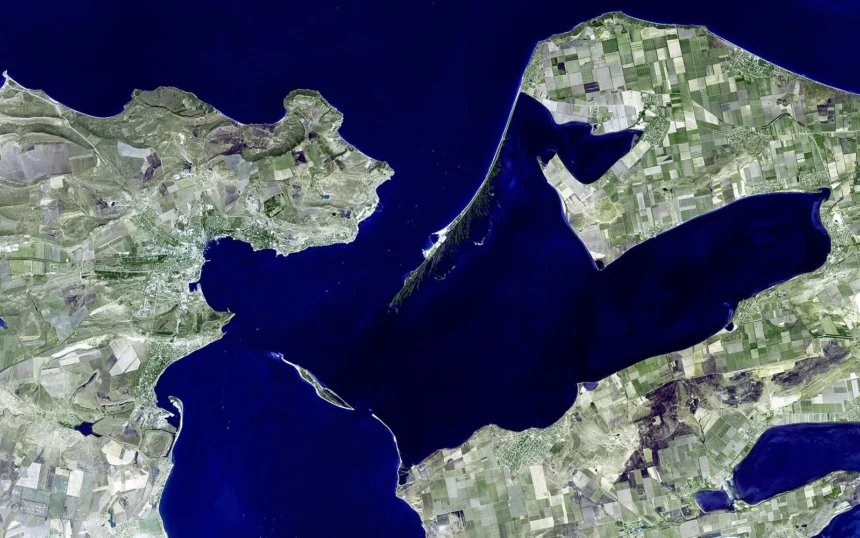
What the British showed
The UK Ministry of Defence published the assessment together with satellite images on X, and it was summarised in Ukrainian by LB.ua and RBC-Ukraine. According to the intelligence, the bridge suffered the most damage in the second strike, on 17 November. An arch section collapsed, making the road section unusable for traffic. Craters from explosions are visible along a stretch of road about 200 metres long.
The arch collapse had another consequence: it blocked the passage for ships travelling between the Sea of Azov and the Black Sea. As RBC-Ukraine reports, citing the UK assessment, vessels in the Sea of Azov will probably be unable to sail directly into the Black Sea until the fairway is cleared.
In the third strike, at midnight on 19 November, the rail section was hit: railings near the arch were damaged and scorch marks are visible on the structure. The British assess that one rail track is probably still in use.
The Pantsirs did not help
In the images, the intelligence marked two Pantsir-S1 air defence systems located about 2.4 km south of the collapsed road section, which did not stop the attacks. According to RBC-Ukraine, the British note that missiles and drones were used in the three strikes.
Vessels in the Sea of Azov will probably be unable to transit directly to the Black Sea until the waterways are cleared.
UK Defence Intelligence (as paraphrased by RBC-Ukraine)
The UK intelligence also notes that the port of Azov has probably stopped operating because of strikes on bridges. This concerns not only the Crimean Bridge but also a crossing near Rostov-on-Don which, according to RBC-Ukraine, was hit on 10 October. According to Ukraine’s Defence Ministry, Russia may need several months to lift and remove the damaged structure.
How the strikes unfolded
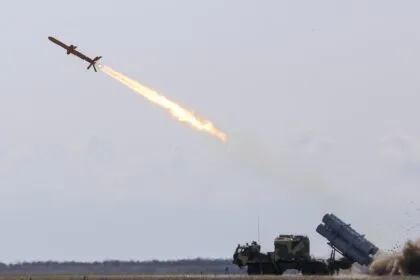
The first attack took place on the night of 16 November, halting road traffic on the bridge for several hours. On the night of 17 November the Defence Forces carried out a larger strike, and an arch and a span of the road section collapsed into the sea. President Volodymyr Zelensky said the operation had seven stages and had been prepared for several weeks. On 19 November the General Staff said the Navy’s coastal Neptune missile systems had hit the rail section of the bridge.
Read also

The strikes on the Crimean Bridge were part of a wider operation against Russian logistics. At the same time, the General Staff confirmed damage to three more road bridges: two over the Mius river in Rostov region and one over the Siverskyi Donets in occupied Luhansk region.
What it means for Crimea
The Crimean Bridge, built by Russia after it occupied the peninsula in 2014, is the main land artery for delivering fuel, ammunition and equipment to Crimea and southern Ukraine. Navy spokesman Dmytro Pletenchuk said Russia lacks the technical means to restore the bridge quickly. The alternatives are a land corridor through the occupied Azov coast and weather-dependent ferries. According to the Association for the Reintegration of Crimea, rail can carry up to 6,000 passengers a day, whereas up to 10,000 people travelled daily from Crimea to Kuban before the span collapsed. From 20 November the occupation authorities launched free passenger boats across the strait, but they do not carry cars or fuel canisters.
As we reported earlier, the strikes led to queues for buses and at cash machines in Crimea, with people being ferried by boat. The bridge has been attacked before: with a truck bomb in October 2022, with sea drones in July 2023, and in June 2025 the SBU said it had blown up the bridge’s supports with underwater explosives.