



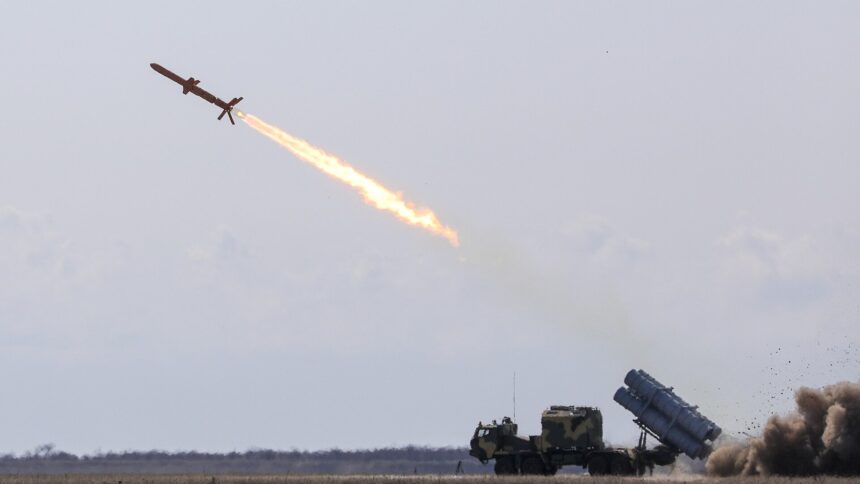
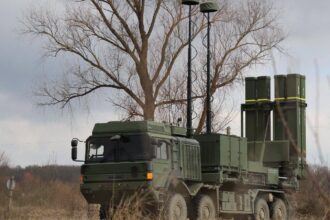
The Navy carried out the strike on the airfield, located about 6 km east of the town of Borisoglebsk, overnight into Thursday, October 15, 2026, using the Neptune coastal missile system. According to the Navy’s press service, ground equipment supporting flight operations was also destroyed in addition to the aircraft, and secondary detonations and a fire were recorded at the airfield. Zelensky later confirmed that the Long Neptune modification had been used in the strike.
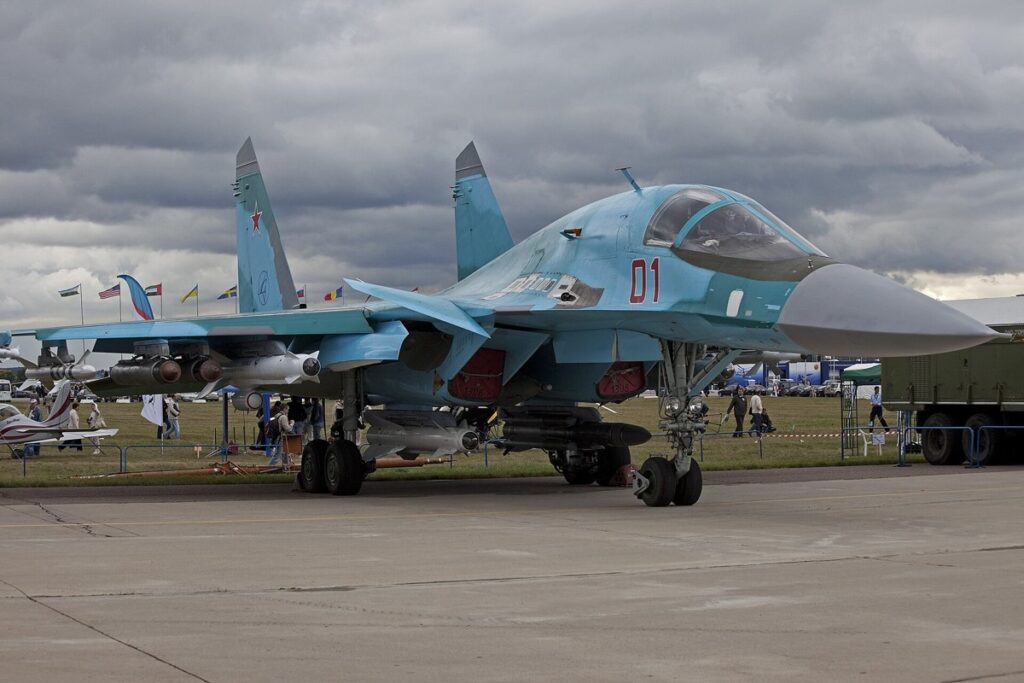
Four Su-34 aircraft have been destroyed and two Su-34 aircraft hit. The Russians used them to terrorise our people. These very aircraft were ready for new strikes on Ukraine and were loaded with aerial bombs.
Volodymyr Zelensky, President of Ukraine
What is known about the results of the strike
Assessments of the damage differ somewhat between sources. The Navy initially reported hitting six Su-34Ms and stressed that the results were still being clarified. The General Staff, as AeroTime noted, more cautiously wrote of damage “of varying degrees” to six Su-34s.
- AviVector satellite images cited by Militarnyi indicate that at least four Su-34s were destroyed and that the strike hit an aircraft parking area where six planes had been spotted the day before.
- In his address, Zelensky gave the same breakdown: four aircraft destroyed, two damaged.
Why the Su-34 is an important target
The Su-34 is one of Russia’s main carriers of guided aerial bombs fitted with UMPK kits, which Russia uses to strike the positions of Ukraine’s Defence Forces and frontline cities. Such bombs allow aircraft to attack without entering the range of some Ukrainian air defence systems. According to the Navy, the upgraded Su-34M can carry several guided and high-explosive aerial bombs as well as various types of missiles.
Defense Express analysts, quoted by UNITED24 Media, estimated that Russia received only four or five new Su-34s in 2026. This means that the losses in a single night at Borisoglebsk may exceed the entire known annual replenishment of the fleet of these aircraft.
The Borisoglebsk strike was already the second hit on Russian Su-34s at airfields within a month. On October 4, as AeroTime recalls, the SBU reported that its drones had hit a Su-35 and a Su-34 at Khanskaya air base in Adygea. Defense Express analysts also counted at least three Su-34s destroyed or damaged earlier in 2026, so together with Borisoglebsk that amounts to at least nine aircraft of this type hit within the year.
An airfield struck before
Borisoglebsk airfield is home to the 783rd training aviation centre, which operates Yak-130s, and since the start of the full-scale invasion it has also hosted Su-34 frontline bombers as well as Su-35S and Su-30SM fighters. Ukrainian forces have attacked this airfield before, including in July 2025, when, according to the General Staff, the Special Operations Forces hit a guided aerial bomb depot.
What’s next
Zelensky linked the strike to the broader campaign of long-range operations and said they would continue: “Our just responses to all Russian terror against Ukraine. Russia is dragging out the war, so our long-range operations will continue.” On the same day, he said, the Defence Forces hit a storage and launch site for attack drones in Oryol Oblast and a target in the Black Sea.
Sources: Militarnyi (Navy statement), Militarnyi (satellite images), Kyiv Post (Zelensky’s statement), AeroTime, UNITED24 Media