



Alpöge posted the claim on his personal website on 20 November. “I believe I have, working with Claude, discovered a proof of the Riemann Hypothesis,” he wrote.
What the Riemann hypothesis is
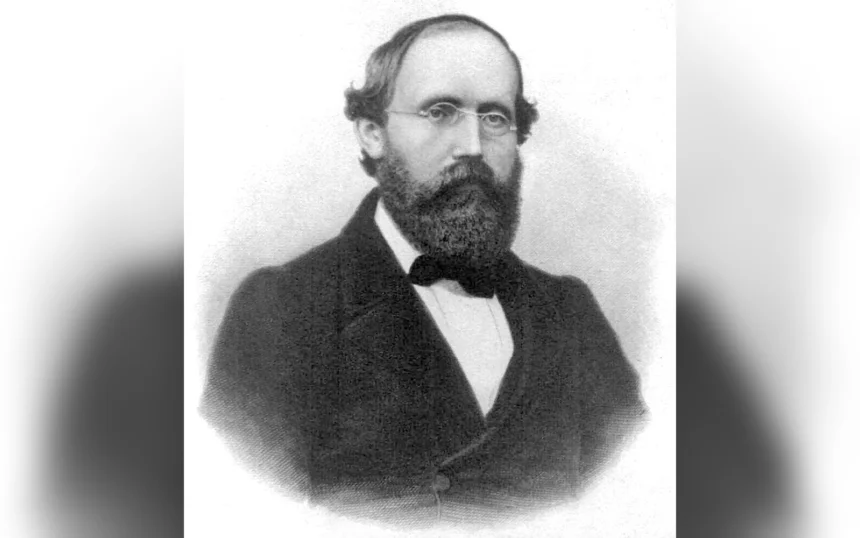
The hypothesis was formulated by the German mathematician Bernhard Riemann in 1859. It concerns the so-called zeta function and states that all of its non-trivial zeros lie on a single line. Put simply, it describes how regularly the prime numbers, those divisible only by one and themselves, are distributed among the integers.
Thousands of other mathematical results have been proved “assuming the Riemann hypothesis is true”. In 2000 the Clay Mathematics Institute made it one of its seven Millennium Prize Problems, with a $1 million prize for a solution.
What exactly is claimed
According to Scientific American, the proof is technically for the generalized Riemann hypothesis, which covers a broader class of functions. According to Wikipedia’s description, the work proves both the classical hypothesis and the generalized one for so-called Dirichlet L-functions. Some even broader versions of the hypothesis remain unproved.
The key feature is the form of the proof. It is written not in ordinary mathematical prose but in Lean, a proof assistant that checks every logical step automatically. The formalization runs to about 17 million lines of code and was developed between 6 October and 16 November.
Verification
The day after the release, the Lean FRO and the Mathlib Initiative, which develop Lean and its library of mathematical definitions, announced an independent verification. “We have full confidence that Alpöge’s proof of the Riemann Hypothesis is correct,” their statement said.
Read also

Mathematician Andrew Sutherland checked the key theorems in Lean. Most of his tests validated the proof, and as of 23 November one test was still running. Checkers are also making sure that the statement of the hypothesis has not been quietly redefined in the code, which could otherwise let the program “prove” something else.
Excitement and scepticism
Mathematicians’ reactions range from euphoria to caution. Fields Medallist James Maynard called the proof, if correct, “a historic milestone”. Brian Conrey, a leading specialist on the Riemann hypothesis, said it was “really the biggest thing I think that’s ever happened in mathematics”. After a preliminary review, Terence Tao noted that the proof appears to use the full power of modern developments in the Langlands program and arithmetic geometry.
There is also criticism. Andrew Granville criticised the four-page document sketching the proof as unclear and pointed to the timing of the announcement, one day after Anthropic’s IPO. Maksym Radziwiłł stressed that there is not yet any human understanding of the proof. Alpöge himself admitted that the Lean code is “full of garbage obviously, but compiles”.
Clay Mathematics Institute president Martin Bridson called the claim an announcement of historic significance but said it would take time to understand. A complete, human-readable account of the proof does not yet exist.
According to Quanta Magazine and TechCrunch, a rival proof that its author describes as entirely human, with no AI involved, appeared on the same day. It also has yet to be checked.
What it means
As Scientific American writes, the most important consequences, if the proof is confirmed, would concern not prime numbers but artificial intelligence: it would be the strongest evidence yet that modern models can do much more than explain existing theorems and can make discoveries beyond human reach. The magazine also notes that proving the hypothesis would not provide any known shortcut to breaking RSA encryption, which underpins internet security.
A final verdict from the mathematical community is unlikely to come soon: experts need not only to check the code but to understand the idea of the proof itself.