



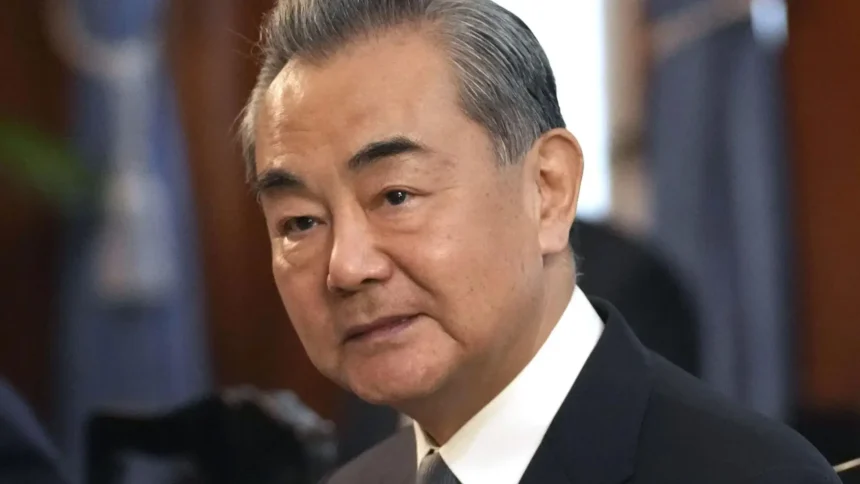
“There are more than 190 countries in the world,” the Chinese diplomat said. If every country emphasises “my country first” and is fixated on a position of strength, the “law of the jungle” will prevail again: smaller and weaker countries will bear the brunt, and international norms and order will take a hit, he added.
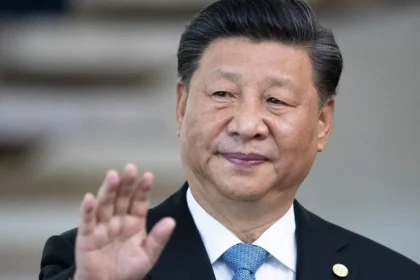
Wang, China’s most seasoned diplomat and a confidant of Chinese leader Xi Jinping, made the remarks while holding his 11th press briefing on the sidelines of the annual “two sessions” meeting of China’s legislature and its top political advisory body.
Typically, this highly choreographed event is an opportunity for Beijing to weigh in on pressing global issues. But this year, as Beijing becomes embroiled in a new trade war with Washington and Trump upends US foreign policy, Wang had a timely opportunity to present China as a reliable leader and stable partner.
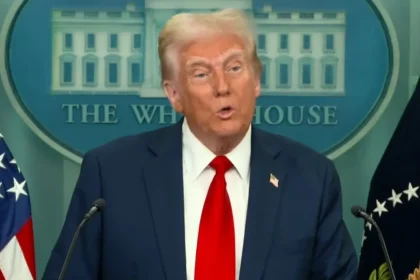
Asked about Trump’s decision earlier this week to double additional tariffs on Chinese imports into the US, Wang struck a defiant tone: “No country should fantasise that it can suppress China on the one hand and develop good relations with China on the other.”
Such a “two-faced” approach is not only not conducive to the stability of bilateral relations but also incapable of building mutual trust, he added.
“A major country should honour its international obligations and fulfil its responsibilities. It should not put selfish interests above principles, still less use its strength to bully the weak,” Wang said, adding that China “firmly opposes power politics and hegemony”.
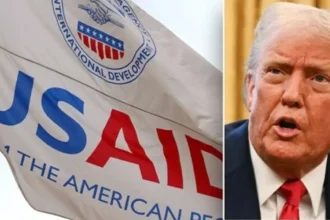
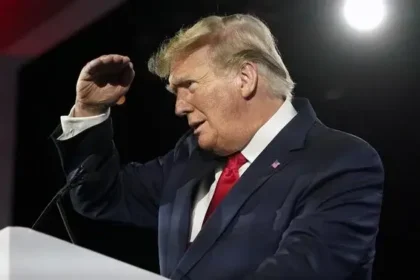
Since taking office in January, Trump has changed the US role on the world stage: he has withdrawn from international pacts and organisations, cut much of America’s vast foreign aid and threatened to take control of other countries’ sovereign territory. His administration has also called long-standing alliances into question, distancing itself from Europe and moving closer to Russia, and earlier this week paused US military aid to Ukraine.
Despite frequent criticism of China’s aggression in the South China Sea and its intimidation of the self-governing democracy of Taiwan, Chinese diplomats have seized on the US president’s shake-ups to give greater momentum to efforts to show that their country, not America, is on the right side of history.
Few global issues fit this rhetoric as well as the war in Ukraine.
Earlier, China’s special envoy for European affairs, Lu Shaye, urged countries to “criticise the US first” rather than China for its ties with Russia.
“Do we still need to ask whether China favours Russia? If they still have doubts about this, they should first criticise the US. The US is not just leaning (towards Russia), it is supporting it,” said Lu, a former ambassador to France known for his combative style.
“European friends should reflect on how much the Trump administration’s policy contrasts with that of the Chinese government,” he said, adding that thanks to its “mutually beneficial” approach to foreign policy, China’s “circle of friends” will only grow.
During his 90-minute press conference, China’s foreign minister also touched on the war in Ukraine and Russia-China relations.
He called the ties between Moscow and Beijing “a constant in a turbulent world” at a time when Trump officials have said they hope to drive a wedge between the two close partners.
Asked how Beijing could influence efforts to bring peace to Ukraine, which so far have been pursued mainly by Washington and Moscow, bypassing Europe and Ukraine, Wang repeated China’s claim that it takes an “objective and impartial” position on the conflict and said it “welcomes and supports all efforts towards peace”. But he also used his answer to back the shared view of Moscow and Beijing, which have long opposed NATO, which they falsely accuse of provoking Russia’s invasion.
“All parties should learn lessons from this crisis,” Wang said, in a veiled reference to the US and its system of European alliances: “No country should build its security on the insecurity of others.”