



Zelensky made the statement in an interview with ABC’s This Week, Reuters and Ukrainska Pravda reported. It was a response to Donald Trump, who said on October 10 that it was “time for Ukraine to choose a new president.” According to Reuters, Trump also accused Zelensky of harming the global diesel market with strikes on Russian oil refineries.
Please tell Putin: give us two months, 60 days of a full ceasefire, and we will organise elections.
Volodymyr Zelensky, President of Ukraine, in an interview with ABC
What the law says
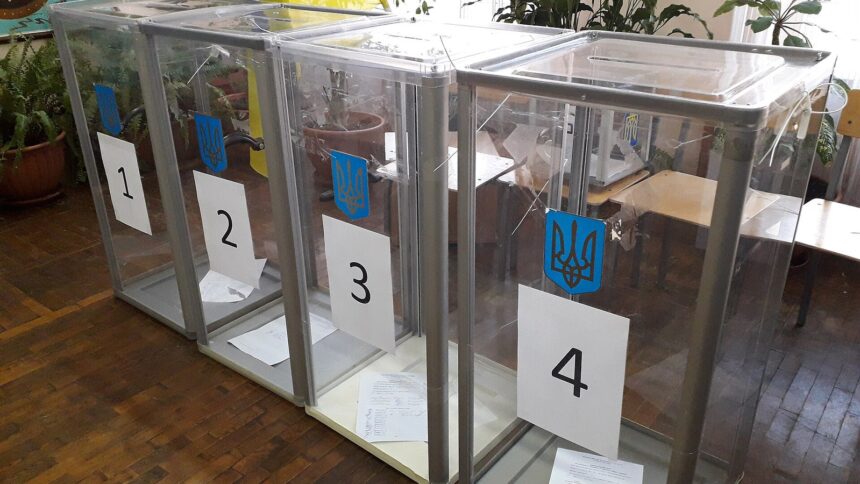
The Law “On the Legal Regime of Martial Law” (Article 19) explicitly prohibits holding presidential, parliamentary and local elections while martial law is in effect. Central Election Commission head Oleh Didenko also stressed in an interview with Ukrinform that under current law no elections are organised or held during martial law. So 60 days of quiet alone would not make a vote possible: martial law would first have to be lifted or the legislation changed.
Zelensky himself acknowledged in the interview that voting during the war is very difficult, contradicts the Constitution and requires security guarantees for voters. At the same time, he said, Ukraine will accept whatever result citizens choose, and it is Ukrainians who must decide who governs the country.
Why 60 days, and why the Kremlin says “one day”
The idea is not new. According to Reuters, as early as December 2025 Zelensky described a 60-day ceasefire as the minimum needed to organise a referendum on a peace plan. In February 2026, he said Russia had agreed to only one day of quiet for elections and called that position absurd, Ukrainska Pravda wrote.
On October 12, Kremlin spokesman Dmitry Peskov repeated this line: Moscow will not agree to a 60-day ceasefire, but Putin, he said, “would be ready to give an order not to strike Ukraine on election day,” Meduza reported. The difference is fundamental: campaigning, candidate registration and voting by the military and millions of displaced people require weeks of relative safety, whereas a single day without shelling neither lifts martial law nor removes the threat to polling stations before and after the vote.
What it means for Ukrainians
Elections in Ukraine are unlikely in the near future: as long as martial law is in force, the law does not allow them, and Russia rejects a lasting ceasefire. Zelensky’s offer effectively shifts responsibility onto Moscow: if the Kremlin wants change in Kyiv, as Zelensky himself claims, the condition for a vote has been stated publicly. Meanwhile, he also proposed an energy truce — Ukraine will not strike Russian refineries if Russia stops attacking Ukraine’s energy system. According to United24 Media, Moscow has not responded to that proposal.
Read also
Sources: Reuters, Ukrainska Pravda, Meduza, United24 Media, Ukrainska Pravda (February 2026), Law “On the Legal Regime of Martial Law”, Ukrinform