



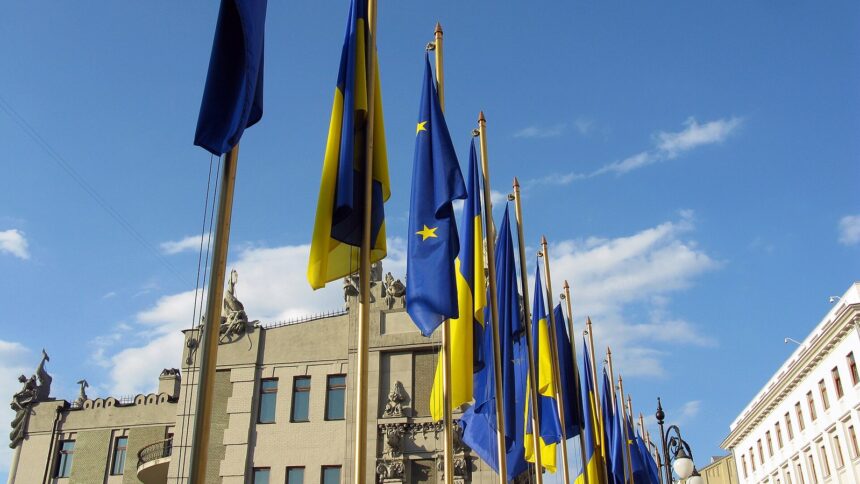
The decision was announced at the fourth Ukraine–EU intergovernmental conference in Luxembourg, the EU Delegation to Ukraine and LIGA.net reported. On the same day, the same two clusters were opened for Moldova. Ukraine now has four of the six negotiating clusters open: the first (“Fundamentals of the accession process”) was opened in June 2026 and the sixth (“External relations”) in July. Clusters 4, “Green agenda and sustainable connectivity,” and 5, “Resources, agriculture and cohesion,” remain unopened.
“Today we have reached another important milestone on Ukraine’s path to EU membership. Today’s decision demonstrates Ukraine’s resilience and determination to move forward with reforms in extremely difficult circumstances”
Thomas Byrne, Ireland’s Minister of State for European Affairs (Ireland holds the presidency of the Council of the EU)
The law that lifted Budapest’s veto
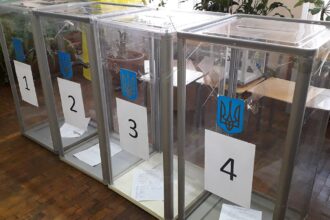
On October 12, the Verkhovna Rada passed a law expanding opportunities for children of national minorities and Indigenous peoples to study in their native languages. A total of 266 MPs voted in favour, Forbes Ukraine reported. Hungary had long blocked the opening of clusters 2 and 3 specifically, linking it to the rights of the Hungarian minority in Zakarpattia. On the same day, Hungarian Foreign Minister Anita Orbán said the adoption of the law would allow the next clusters to be opened at the October 13 conference. That same day, all 27 EU countries unanimously approved the step, Kyiv Post wrote.
The law’s main provisions, according to Forbes Ukraine:
- children can study in their native language alongside Ukrainian; the rule applies to the official languages of the EU and the languages of Indigenous peoples, and Russian is not on the list;
- a school receives national minority school status if at least 50% of its students plus one child study in the minority language; according to the Ministry of Education, 149 schools — about 1.2% of all schools — could qualify;
- such schools cannot be closed or reorganised without the approval of the Ministry of Education;
- Ukrainian remains mandatory, and parents can seek an increase in the number of subjects taught in the state language.
What the new clusters mean
The “Internal Market” cluster contains nine chapters: free movement of goods, services, workers and capital, competition rules, financial services, company law and consumer protection. The “Competitiveness and Inclusive Growth” cluster has eight chapters, ranging from taxation and economic and monetary policy to digital transformation, education, science and the customs union, the EU Delegation explains. Opening the clusters does not mean the reforms are complete: the Council of the EU has already set the benchmarks Ukraine must meet to provisionally close the relevant chapters.
Prime Minister Serhii Koretskyi called the decision an important step towards Ukraine’s economic integration with the EU and the start of substantive negotiations on 17 chapters of European law. According to him, as quoted by LIGA.net, Ukraine has met the conditions for opening all six clusters and expects to open the last two by the end of 2026.
What’s next
The opening of clusters 4 and 5 has again been stalled by Hungary. On November 10, at a meeting of the Council of the EU’s Working Party on Enlargement (COELA), Budapest once again refused to approve the screening results for these clusters, European Pravda reported, citing EU sources. Deputy Prime Minister for European and Euro-Atlantic Integration Vsevolod Chentsov said on November 4 that Hungary was not putting forward new demands on minority rights and was explaining the delay by the need to study the documents further.