



The attack on Omsk on Wednesday, November 11, 2026, lasted several hours. The first explosion, according to the Ukrainian OSINT community Exilenova+, was heard at around 13:30 Kyiv time, and sirens sounded in the city for more than eight hours, local officials and monitoring channels reported. The strike was confirmed by the Special Operations Forces and the General Staff of the Armed Forces of Ukraine. According to the SSO, the Omsk refinery is the most distant Russian oil refinery ever hit by Ukrainian drones.
The SSO will bring the war Russia started back to it, no matter how far the enemy tries to hide its facilities.
Special Operations Forces of the Armed Forces of Ukraine
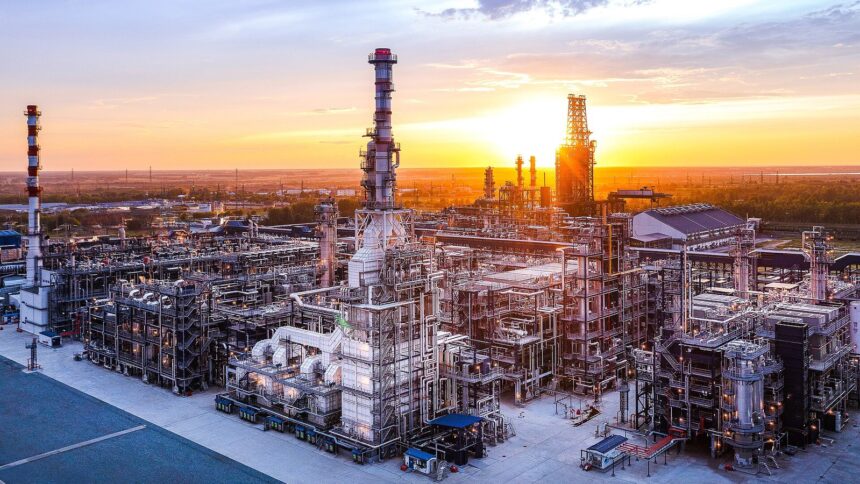
Why the Omsk refinery matters
The plant belongs to Gazprom Neft and, according to the SSO, processes more than 21 million tonnes of oil a year. It produces gasoline, diesel and jet fuel, as well as petrochemical products.
- the Omsk refinery accounts for one in six liters of Russian gasoline and diesel (The Kyiv Independent);
- the plant’s oil refining depth, according to the General Staff of the Armed Forces of Ukraine, is about 99%, one of the highest rates in Russia;
- the General Staff also noted that the facility is involved in supplying fuel to the Russian army.
According to the Ukrainian OSINT community Exilenova+, quoted by UNITED24 Media, the plant’s design capacity exceeds 21 million tonnes of oil a year, about 10% of all Russian oil refining. The facility produces AI-92, AI-95 and G-Drive 100 gasoline, Euro-5 diesel fuel, jet fuel and lubricants. The Cyber Boroshno community noted that this was the first time during such long-range strikes that an attack lasted several hours in a row.
What is known about the aftermath
Omsk Governor Vitaly Khotsenko confirmed a drone attack on the region and urged residents to stay at home. He later said emergency services were working at all sites where “drone debris” fell, but did not specify which facilities had been affected. Local Telegram channels reported closed airspace and restrictions on mobile internet.
The independent Russian outlet Astra, citing OSINT analysis, confirmed a fire near the plant, although the exact targets and extent of the damage remain unknown. According to Astra, power went out in some districts of Omsk, including Neftyaniki and Amur. The Kyiv Independent was unable to independently verify the extent of the damage at the time of publication.
Third strike in four months
The SSO first attacked the Omsk refinery on July 6, 2026: after that strike, the plant completely halted oil refining and was taken offline for repairs. It was hit a second time on October 8. On the same day, November 11, Ukrainian monitoring resources also reported a large fire near the port of Ust-Luga in Russia’s Leningrad Oblast.
Read also

What’s next
Strikes on distant Russian refineries have become possible thanks to the development of Ukrainian long-range drones. President Volodymyr Zelensky calls such operations “long-range sanctions” and one of the strongest levers of pressure on Russia. The final consequences of the attack on the Omsk refinery will become clear once satellite images or data on the plant’s operations appear.