



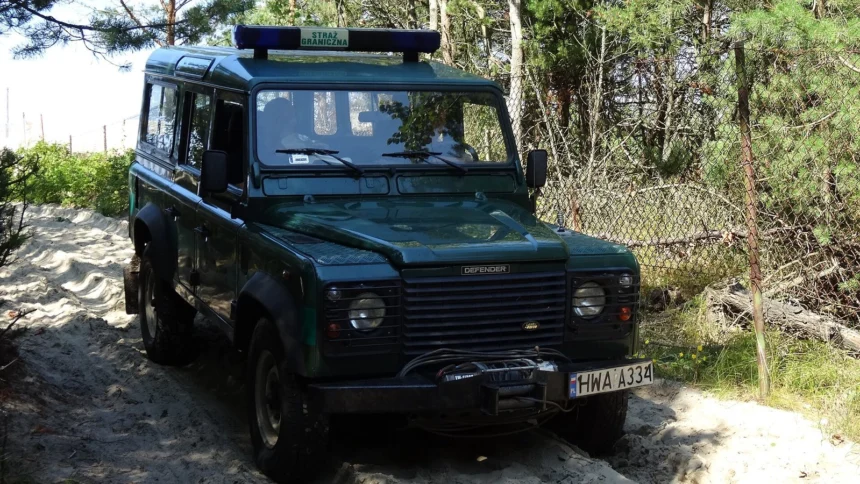
Rzeczpospolita reported the foiled operation on 18 November, citing unnamed senior officials in the uniformed services. According to them, Russian intelligence planned a sabotage operation near the border with the Russian exclave: a group of people was to cross the border and attack a specific target. The paper did not say exactly where the target was, but its sources said Russia was counting on a large number of casualties.
We had information about specific sites where the attack was supposed to take place. The Russians were counting on a large number of casualties.
Unnamed security source quoted by Rzeczpospolita
What the provocation was supposed to look like
One of the paper’s sources compared the plan to the 1939 Gleiwitz incident, when German operatives in Polish uniforms staged an attack on a radio station. According to the Rzeczpospolita source, those who crossed the border would most likely have been shot, or “evidence” of Ukrainian origin would have been found on them. The goal, he said, was to stop aid to Ukraine.
On 19 November, retired general Mieczysław Bieniek, an adviser to Poland’s defence minister, described a similar scenario on TVN. If a group of Russians dressed in Ukrainian or Polish uniforms attacked a target, he said, the side whose uniforms they wore would naturally be blamed. “Fortunately, nothing of the sort happened,” the general said. He added that an incident with potentially tragic consequences had been thwarted thanks to information from allies and Polish intelligence.
What Poland did
According to the paper, the warnings came from partner intelligence services, while Polish analysts had also spotted signs of a possible provocation. Particular concern arose when Russian officers who coordinate sabotage operations appeared near the border on the Russian side. Lithuania, Latvia and Estonia received similar warnings, the paper said.
- about 180 police officers, including counter-terrorism units, were sent to the border areas;
- the Border Guard and the Internal Security Agency were reinforced;
- the army’s GROM, NIL and AGAT special units were deployed there as well;
- on 3 November, Prime Minister Donald Tusk said “people with flashlights” had been spotted at the border and that a provocation had been prevented.
What Warsaw says
Tomasz Siemoniak, the minister coordinating the security services, declined to confirm details. “If we took certain steps, it was because we recognised there was a real threat,” he told Rzeczpospolita, adding that intelligence assessments should not be treated as established facts. Defence Minister Władysław Kosiniak-Kamysz said the provocation did not happen because Poland responded appropriately. Russia, he said, is rapidly climbing the “escalation ladder”, from airspace violations and attempted train bombings to sabotage at arms factories and cyberattacks. Tusk confirmed the government had received signals that “unacceptable events” could occur near the border, but said the details were being kept confidential.
What it means for Ukraine
According to the Polish sources, Russia was trying to drive a wedge between Ukraine and Poland, the main logistics hub for Western aid to Kyiv. As early as June, Polish Foreign Minister Radosław Sikorski warned that he expected a Russian “false flag” attack and cited the Gleiwitz precedent. Making such plans public makes it harder for Moscow to shift the blame onto Kyiv if new incidents occur.
Read also
What we know so far
The Polish authorities have not released evidence confirming a specific attack plan, and the detailed account of the plot relies on Rzeczpospolita’s anonymous sources. At the same time, the prime minister, the defence minister and the security services coordinator have publicly acknowledged that the threat on the Kaliningrad border was taken seriously and prevented. Moscow has not commented on the reports. Meanwhile, on 20 November, during a massive attack on Ukraine, two Russian missiles and probably a jet-powered drone fell on Polish territory.