



This was reported by Reuters in an analysis published on October 10.
According to a Reuters analysis of data from the Centre for Research on Energy and Clean Air (CREA), EU countries imported more than €11 billion worth of energy from Russia in the first eight months of 2025. That is almost 90% less than before 2022, but even this volume continues to fuel Moscow’s war economy.
Seven of the 27 member states increased the value of their purchases compared with last year, five of them staunch allies of Ukraine. France increased its imports of Russian energy by 40% to €2.2 billion, and the Netherlands by 72% to €498 million. According to analysts, France sends part of the gas on to Germany.
Although liquefied natural gas (LNG) ports in countries such as France and Spain serve as entry points for Russian supplies into Europe, the gas is often not consumed in those countries but sent on to buyers across the bloc.
Vaibhav Raghunandan, EU–Russia specialist at CREA, described the increased flows as “a form of self-sabotage” by some countries, given that energy sales are the biggest source of revenue for Russia, which is waging war against Europe-backed Ukraine.
“The Kremlin is literally getting funded to keep deploying its armed forces in Ukraine,” he said.
Read also
Despite Brussels’ efforts to reduce dependence on Russian gas, supplies via LNG ports remain a loophole. Liquefied natural gas (LNG) from Russia’s Yamal terminals is supplied by private companies, including France’s TotalEnergies, Shell, Naturgy, Germany’s SEFE and the trader Gunvor. These contracts run until the 2030s–2040s, and the companies cannot halt them without official EU sanctions.
TotalEnergies said it would continue supplies as long as EU governments consider Russian gas necessary for energy security. Experts point out that terminating contracts without a legal basis would mean fines or compensation, and in some cases even “double financing” of the Russian economy: the supplier would receive payment from the EU and could resell the same volumes.
The situation has prompted a new wave of criticism from the United States. Speaking at the UN General Assembly, President Donald Trump sharply condemned European leaders, demanding that they immediately stop buying Russian energy. “Europe cannot fight Russia and buy oil and gas from it at the same time. It’s embarrassing,” he said.
In response to pressure from Washington, the EU announced plans to bring forward a ban on Russian LNG imports to 2027 instead of 2028. But even if this plan is implemented, European money will continue to flow to the Kremlin for at least another year. At the same time, switching to US gas, which the Trump administration is promoting, would mean growing dependence on the United States.
Analysts at Columbia University warn that a one-for-one replacement of Russian LNG with American LNG is impossible, since US supplies are controlled by private companies that operate on commercial rather than political principles.
The import figures show uneven approaches among EU countries. In addition to France and the Netherlands, increased purchases were recorded by Belgium (+3%), Croatia (+55%), Romania (+57%) and Portugal (+167%). Hungary stands apart: it maintains particularly close ties with the Kremlin and has no plans to give up Russian gas; its imports rose by 11%.
France’s TotalEnergies (TTEF.PA) is among the largest importers of Russian LNG into Europe. Other major players include Shell (SHEL.L), Spain’s Naturgy (GBANm.BA), Germany’s SEFE and the trading company Gunvor (GGL.UL). All of them have long-term contracts running until the 2030s or 2040s.
TotalEnergies told Reuters it continues to take deliveries from Russia’s Yamal plant under contracts that cannot be suspended without official EU sanctions. The company added that it would maintain supplies as long as European governments consider Russian gas necessary for energy security. Shell, Naturgy and Gunvor declined to comment on Russian imports.
Ronald Pinto, lead gas research analyst at Kpler, said companies are reluctant to risk fines for breaching contractual obligations without solid legal cover in the form of an EU ban on Russian LNG.
“At the end of the day, this LNG is bought by market players, not countries, and for the most part they stick to their long-term contracts,” he added.
According to CREA, since 2022 the European Union has bought more than €213 billion worth of energy from Russia. This far exceeds the amount of aid to Ukraine over the same period, €167 billion, including financial, military and humanitarian support.
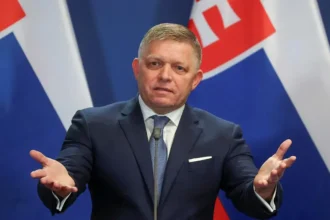
The EU has already banned most purchases of crude oil and fuel from Russia, but gas remains a vulnerable area, with long-term contracts in force and no unity among member states. Hungary and Slovakia, which retain access to Russian pipeline gas, do not support sanctions on LNG, making it harder to adopt new restrictions.
Despite political statements about “energy independence from Moscow”, the statistics show the opposite. European money continues to support the Russian budget, undermining the effectiveness of the sanctions policy that the EU itself considers one of its key tools for pressuring the Kremlin.