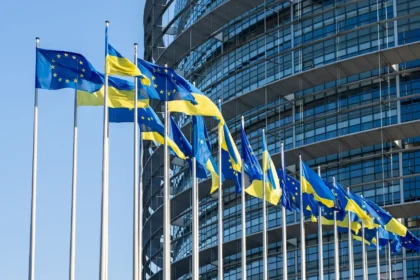




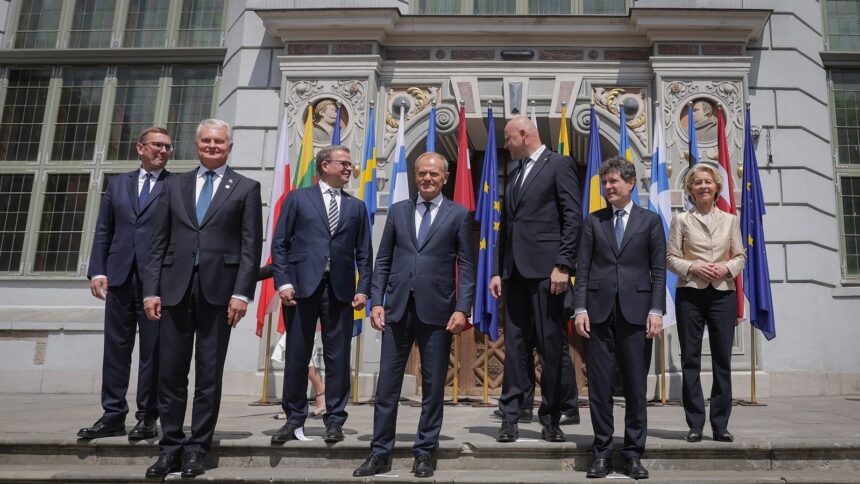
The transfer was announced by European Commission President Ursula von der Leyen at the Ukraine Recovery Conference in Gdańsk, and Prime Minister Yulia Svyrydenko confirmed that the funds had already reached the state budget and would be used to strengthen defence capabilities and social resilience, Euronews and The Kyiv Independent reported. Von der Leyen also announced that payments of €6 billion for drone production would begin in the coming days.
This is truly solidarity in action. It shows that Europe’s support for Ukraine is not going anywhere.
Ursula von der Leyen, President of the European Commission
What the loan is and what the money is for
EU leaders agreed on the loan in December 2025, when a plan to use frozen Russian assets directly failed to win support, and opted for joint EU borrowing instead. According to the European External Action Service (EEAS) and Euronews, the money will be allocated as follows:
- €30 billion for general budget needs through macro-financial assistance and the Ukraine Facility;
- €60 billion for defence, including weapons purchases and the development of Ukraine’s defence industry;
- up to €45 billion is available in 2026: €16.7 billion in financial support and €28.3 billion in military support.
Twenty-four EU countries are taking part in the mechanism: Hungary, Slovakia and Czechia negotiated an exemption. Weapons funded from the loan are mainly to be bought in the EU, Ukraine or EEA countries, although an exception has been made for drones with Chinese components.
Will Ukraine have to pay?
For the average Ukrainian, this is probably the key point: under the terms cited by the EEAS, Ukraine will repay the loan only once it receives reparations from Russia. The interest is paid by the EU budget, at about €3 billion a year, according to Euronews. The EU reserves the right to use the immobilised assets of the Russian Central Bank, about €210 billion, if Moscow does not pay reparations. In other words, unlike ordinary loans, repayment does not depend on a fixed schedule of payments from Ukraine’s budget, but on whether Russia pays.
What the next tranches depend on
Each disbursement is tied to reforms: public finance management, revenue mobilisation, the rule of law and the fight against corruption. As The Kyiv Independent notes, some of the conditions involve unpopular tax changes, and on May 22 the EU approved only partial payments under three rounds of assistance because the Verkhovna Rada had not passed all the required laws. Euronews adds that backsliding on anti-corruption efforts could lead to payments being temporarily suspended. So the speed at which the money reaches the budget, and with it payments to the military, public sector employees and pensioners, depends largely on the work of Ukraine’s parliament.