



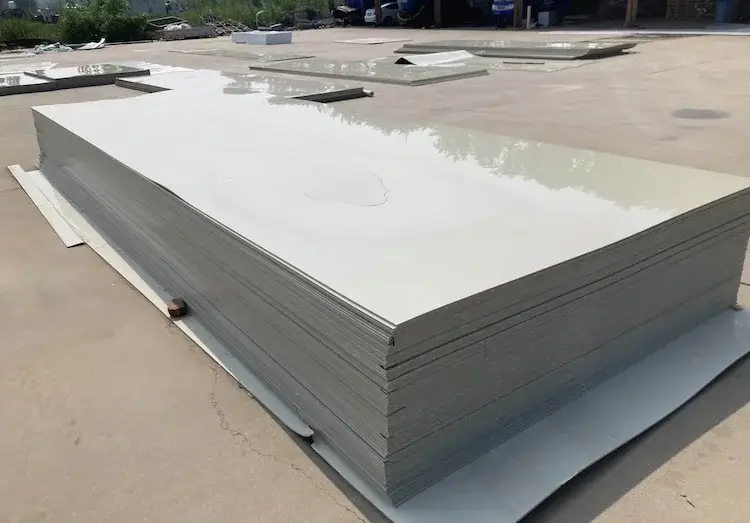
Polypropylene is one of the few plastics that can safely be used both on a construction site and in an industrial workshop. Standard grey polypropylene sheet looks simple: smooth grey or white boards of various thicknesses (there are photos here: https://pkf-elektroplast.com.ua/ua/p1625902559-polipropilen-listovoj-seryj.html). The material is made by polymerising propylene, a hydrocarbon from the alkene group. In finished form it resembles PE (polyethylene) but is denser and stiffer. The main difference is its high heat resistance: the sheets withstand temperatures of up to +100°C without deforming. Let’s look at why the material is in demand in manufacturing and construction, where it is used and where it is not.
How polypropylene is used
First and foremost, it is a structural material. It is used to make air ducts, casings, partitions and linings for tanks and containers. In production facilities it is often used as a finishing sheet: to cover walls and the sides of baths and to screen off washing areas. This is especially relevant where aggressive chemicals, such as alkalis, acids and disinfectant solutions, are part of the daily routine.
Take, for example, a container-washing line. In an area of constant contact with hot water, detergents and mechanical stress, conventional tiles, metal and painted panels fail within a couple of months. As noted on the website of electrical insulation materials supplier Elektro Plast, a 5–6 mm polypropylene sheet easily withstands such conditions for 3–5 years without visible signs of wear. It does not rust, delaminate or crack when temperatures fluctuate.
Another important application is the creation of waterproof partitions, formwork for pouring concrete and ventilation ducts. The sheets are easy to cut and join, and their low weight simplifies installation.
Machining and welding
In terms of machining, polypropylene is one of the easiest materials to work with. It can be sawn, drilled, bent and milled. Importantly, tools must not be blunt, or the edges may melt. The sheets are welded with either an extrusion welder or a hot-air gun with filler rod. This allows elements to be joined hermetically without rivets, bolts or sealant. In other words, you can assemble, for example, a process bath or a closed container right on site.
Where polypropylene sheet is not used
Despite its resistance to chemicals and impact, polypropylene does not tolerate ultraviolet light. If used on a facade, it will start to fade and lose strength within a couple of seasons. Outdoors without a UV stabiliser, it is a temporary solution. It is also important to understand that it loses stiffness at +80°C and above. You can pour boiling water into a container made of it, but the sheets should not be used regularly in areas of direct thermal contact.